
Our Team

Lee Rush
Executive Director
Lee is the founder of justCommunity, Inc. and has served as its Executive Director since the organization’s inception in 1999. He served in senior management positions from 1986 to 1999 as the Director of Human Resources for LifeQuest, a mid-size company specializing in senior healthcare services and as Executive Director of LifeQuest Foundation. He held various positions as an administrator, counselor and teacher in an alternative school and day-treatment setting from 1979 to 1986. Lee graduated from Indiana University of Pennsylvania with a Bachelor of Arts Degree in Criminology and Temple University where he earned a Masters of Education Degree. Lee served as the Executive Director of the National Student Assistance Association (NSAA) from 1995 to 2008. NSAA is the country’s sole advocacy organization devoted solely to enhancing the development of Student Assistance Programs throughout the United States. Lee and his wife have one child and live in Perkasie, PA.
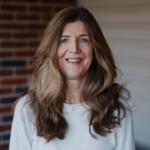
Julie Hagar
Program Administrator
Julie is justCommunity’s Program Administrator and plays a critical role in the organization’s day-to-day success. She enjoys this opportunity to meet people, learn new things, and keep busy in the new “empty-nest” stage of her life. She is a long-time resident of Quakertown, a loving wife to her husband James, and a mother of four. She worked in banking for over ten years after college before becoming a full-time mom and homeschooling her four children from grades K-12. Julie loves her new role as Mimi to her two grandchildren and looks forward to meeting her third grandchild in late May 2022!”
Board of Directors

William J. Hartwell Jr.
Bill is a writer, entrepreneur and counselor. He holds a Master’s degree from Temple University with certifications in school counseling and education leadership. He has consulted with numerous corporations in his role as co-owner of a business specializing in team building and leadership development. Prior to this he spent two decades working in Corporate America for companies which include SAP America and Harris Corporation. He is a husband and father of three young adults. He spends his free time reading philosophy, writing stand-up comedy and watching movies. He is currently employed as a school counselor working with high school students.

Mitzi Nevin
Mitzi brings a rich and diverse background in several disciplines and business sectors. During the first phase of her career, she established herself as an accomplished floral designer, graphic designer and painter. More recently, Mitzi expanded her professional expertise to computer training and software instruction and to designing databases and Web sites for area companies. Mitzi is a member of the Upper Bucks Sertoma Club, and has been a member of its board since 1998, including serving as secretary. She is a past member of Last Chance Ranch Equine Rescue, a non-profit organization based in Quakertown. Raised on Long Island, NY, Mitzi attended C.W. Post College, a branch of Long Island University. Mitzi is married with three grown children, 7 grandchildren and has resided in Quakertown since 1971.

Jessica Walker
Jessica is a marketing and engagement expert with vast expertise in life sciences and behavioral health. With a personal interest in addiction, mental health, and special education, she began working as a consultant for Just Community in 2010 and as a board member in 2019. Jessica is very involved in her children’s school district and education. Mom to four, and animal lover and rescuer, Jessica resides with her family in Montgomery County, PA.

Ben Goebel
Ben is a French immigrant who wants to improve the conditions for every community. He is a Program Manager for The Welcoming Center in Philadelphia and is very involved in the immigrant community. Ben is also a Board member of the Young Professionals Council at the Chamber of Commerce for Greater Philadelphia and is part of I Belong, a group of volunteers giving space to immigrants to empower themselves. Ben lives with his wife in Philadelphia, where he moved six years ago.